Every oil or fat behaves a little differently in the pan. Choosing the right one is about two things: how hot you’re going to cook, and how much you want to taste it.
Why some oils smoke and burn
Every fat has a smoke point: the temperature at which it starts to break down and smoke. Past that point it tastes bitter and acrid and fills the kitchen with smoke. Refined oils, which have been filtered to remove flavour and particles, can take much higher heat. Unrefined oils, such as extra virgin olive oil and butter, contain more of the bits that burn, so they suit gentler cooking or finishing.
If oil starts to smoke, turn the heat down or take the pan off. Never leave hot oil unattended.
Which to use
| Fat | Flavour | Best for |
|---|---|---|
| Vegetable or rapeseed oil | Neutral | High-heat frying, roasting, stir-frying, deep frying, baking |
| Sunflower oil | Neutral | Frying, roasting and baking |
| Olive oil (not extra virgin) | Mild | Everyday frying, softening onions, roasting vegetables |
| Extra virgin olive oil | Fruity, peppery | Dressings, drizzling, gentle cooking, Mediterranean dishes |
| Toasted sesame oil | Strong, nutty | A few drops at the end of stir-fries and dressings, not for frying |
| Groundnut (peanut) oil | Neutral | Stir-frying and deep frying. Contains peanut, a major allergen |
| Butter | Rich | Gentle frying, basting, sauces and baking. Burns at high heat |
| Ghee or clarified butter | Rich, nutty | Higher-heat frying with a butter flavour, curries |
| Coconut oil | Coconut, unless refined | Some curries and baking |
If you only buy two, make them a neutral oil such as rapeseed or vegetable oil for cooking and extra virgin olive oil for dressings and drizzling.
Butter that doesn’t burn
Butter burns because of its milk solids. Add a splash of oil to the pan with the butter and it will cope with a little more heat. For basting a steak, sear it in oil first, then add the butter at the end. Ghee and clarified butter have the milk solids removed, so they can take much more heat.
Oil for roasting
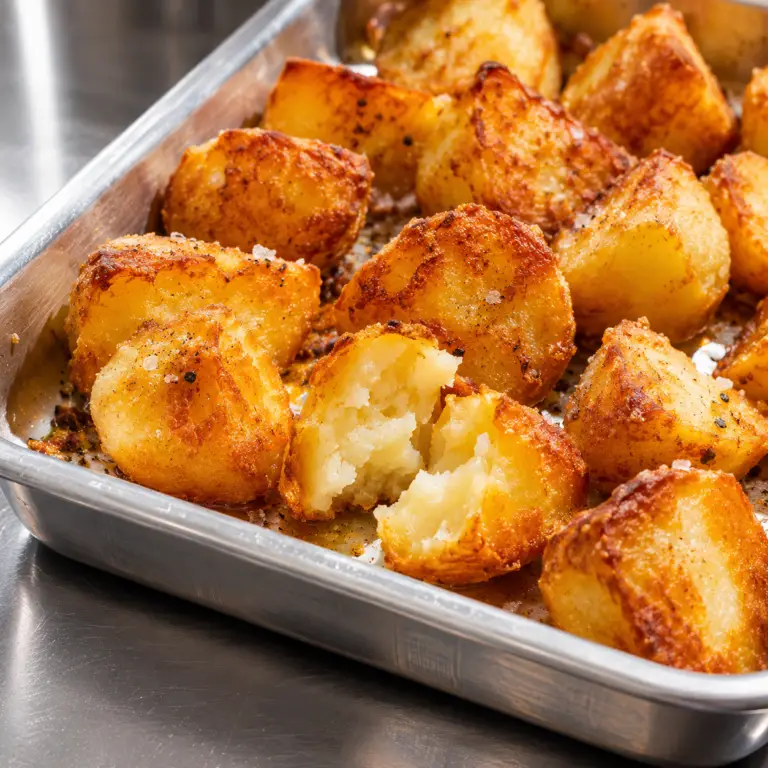
For crisp roast potatoes, heat the oil in the tin in the oven before the potatoes go in, so they start sizzling straight away. A neutral oil, goose fat or beef dripping all work. See our crispy roast potatoes.
Storing oil
- Keep oil somewhere cool and dark, away from the hob. Heat and light make it go stale.
- Oil that smells like crayons, paint or old nuts has gone rancid. It will spoil the taste of your food, so replace it.
- Nut and seed oils go off faster, so buy small bottles.
Getting rid of used oil
Never pour oil or fat down the sink. It sets in the pipes and causes blockages. Let it cool, then pour it into a sealed container and put it in the bin, or wipe pans with kitchen paper first. Some local councils collect larger amounts of cooking oil, so check their website. Strained deep-frying oil can be reused once or twice if it still smells fresh.
For more, see shallow frying and deep frying safely.